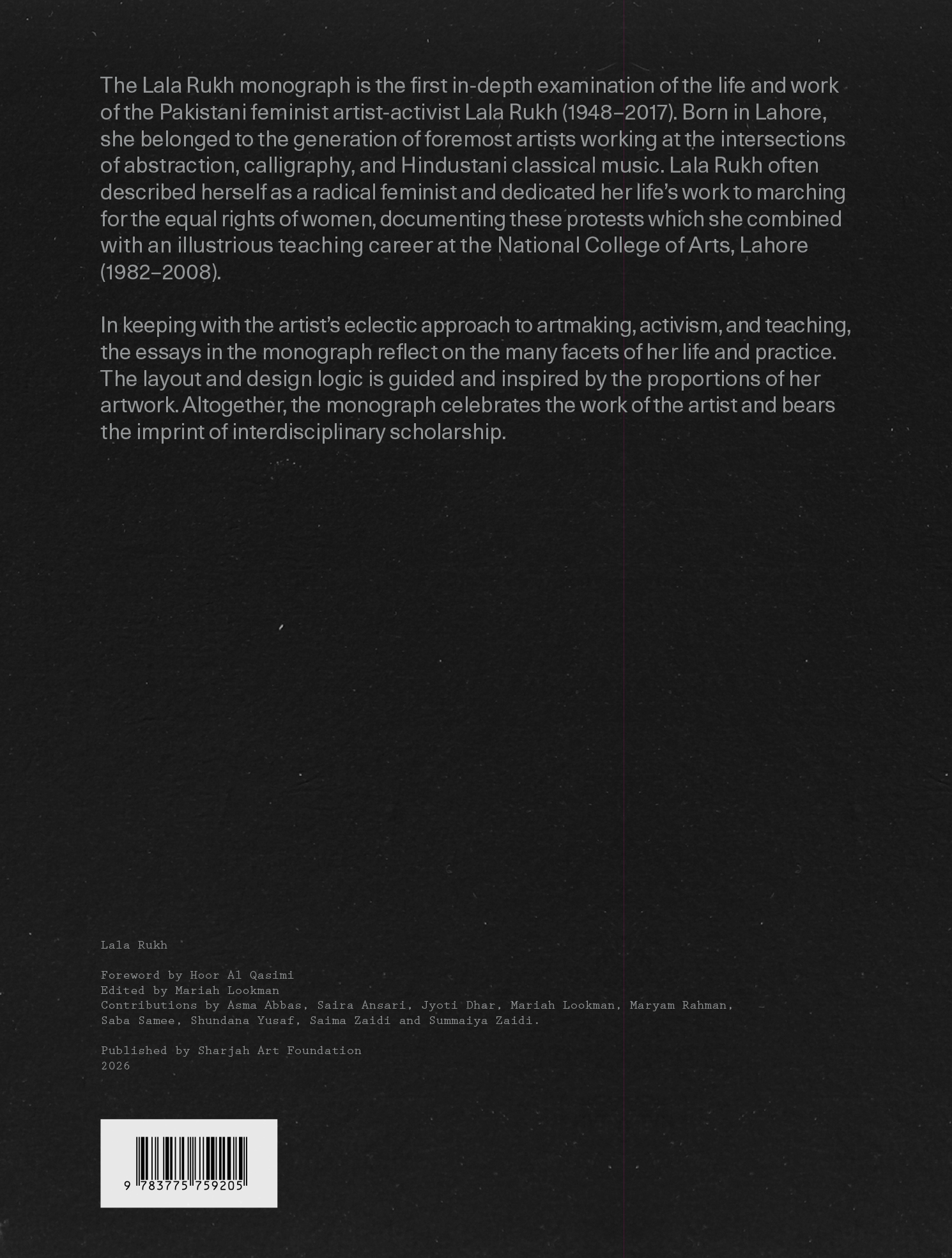
The first in-depth examination of the life and work of the Pakistani feminist artist, activist and pedagogue Lala Rukh (1948-2017).
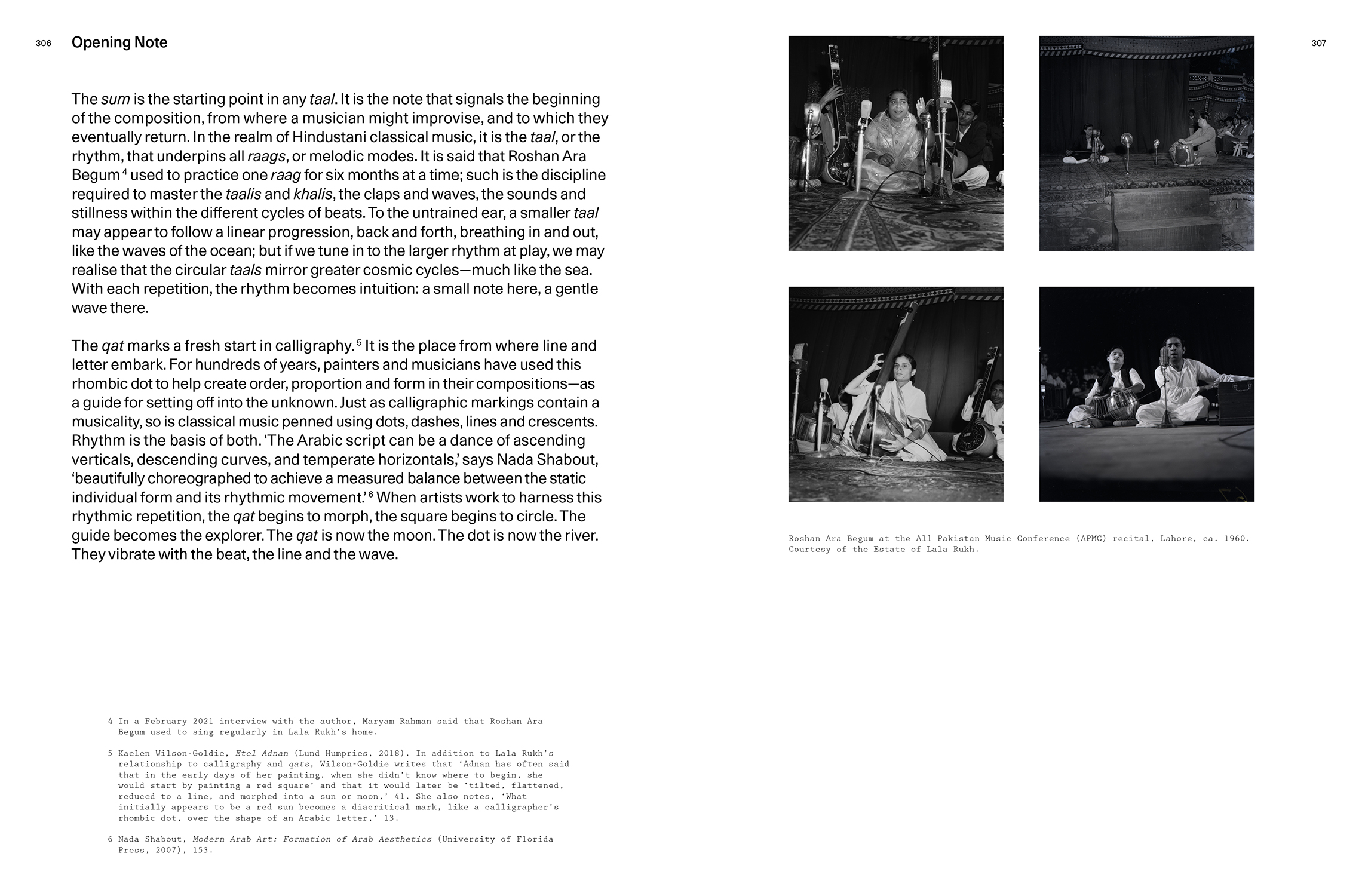
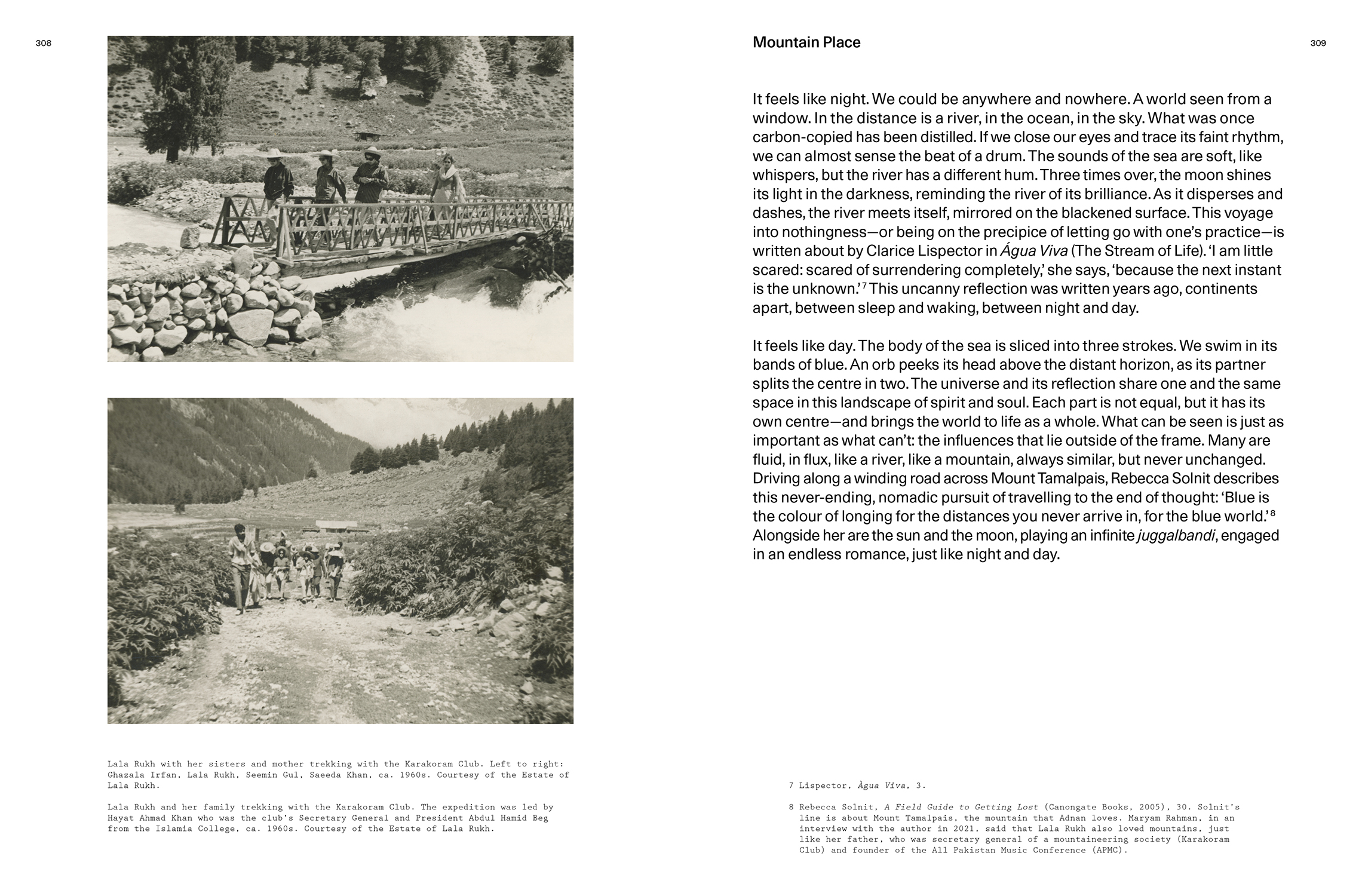
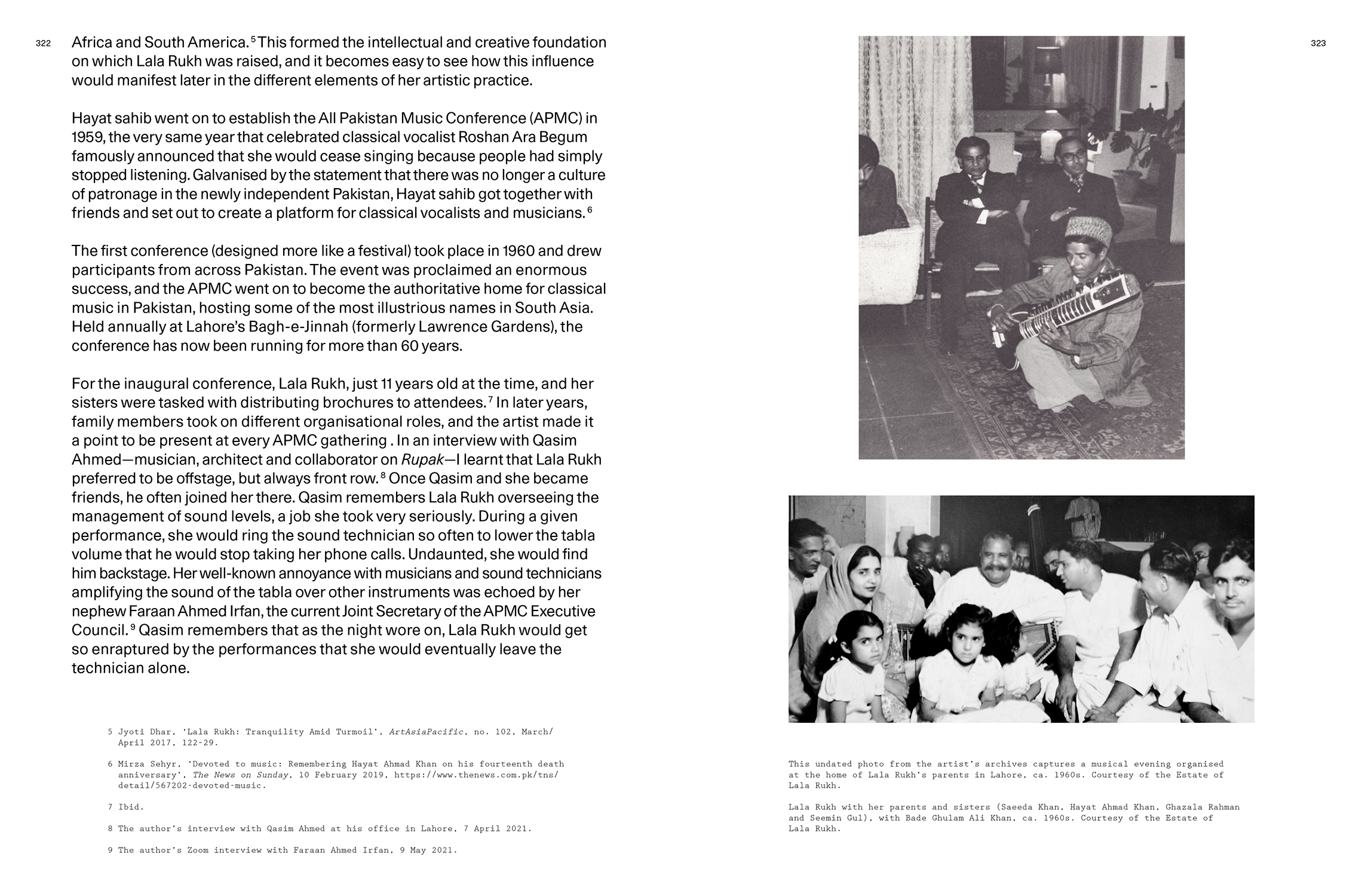
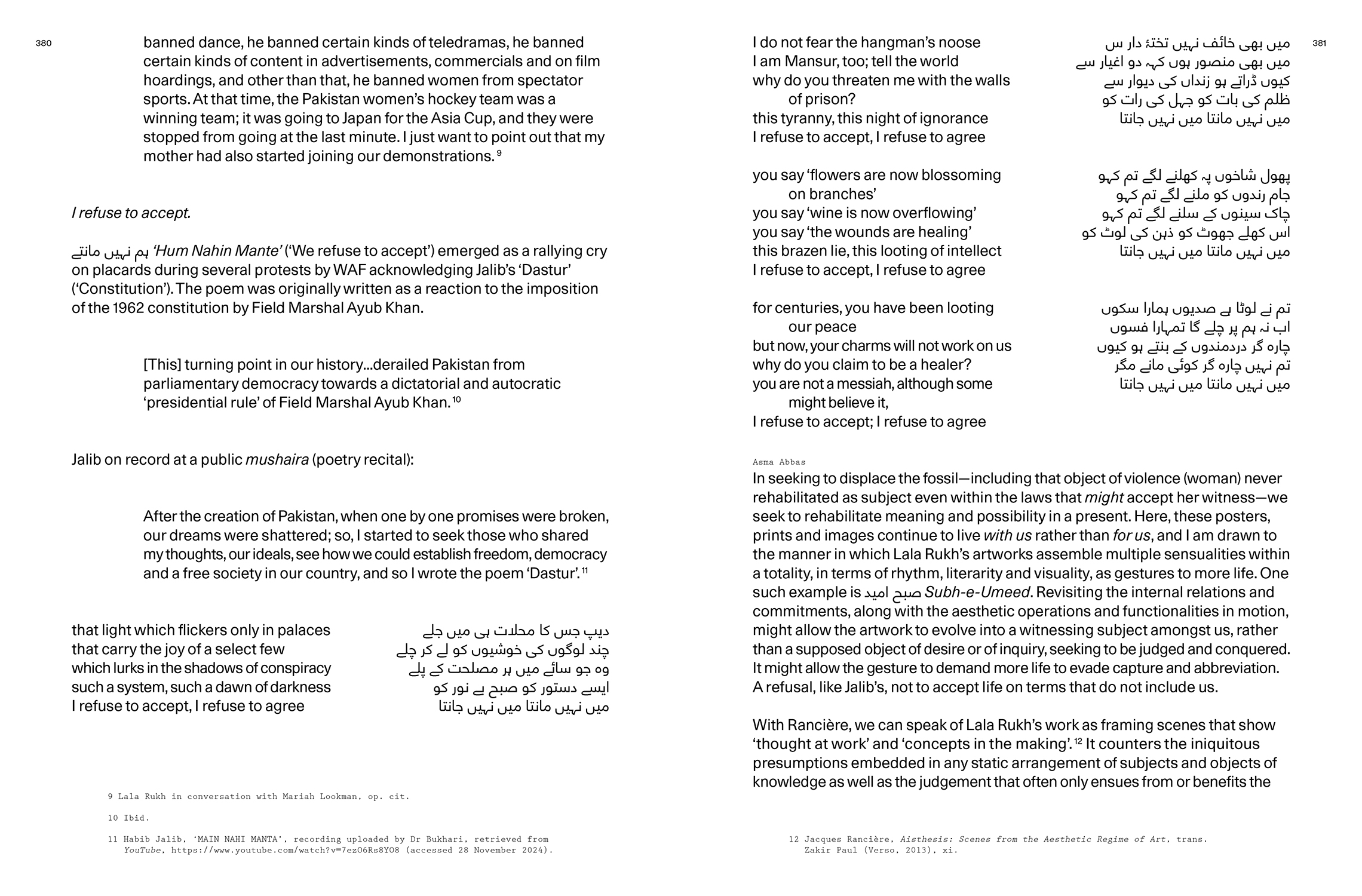
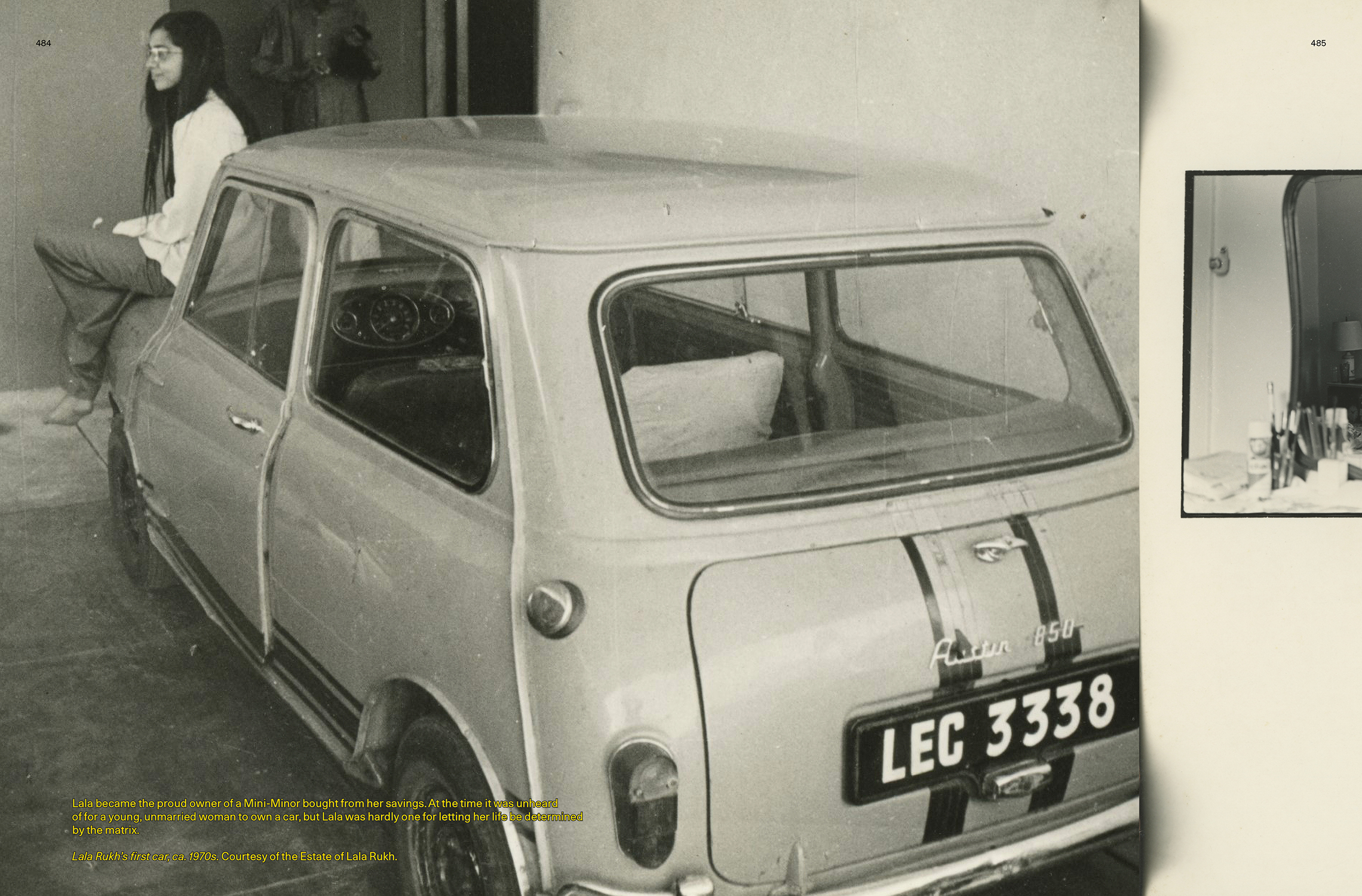
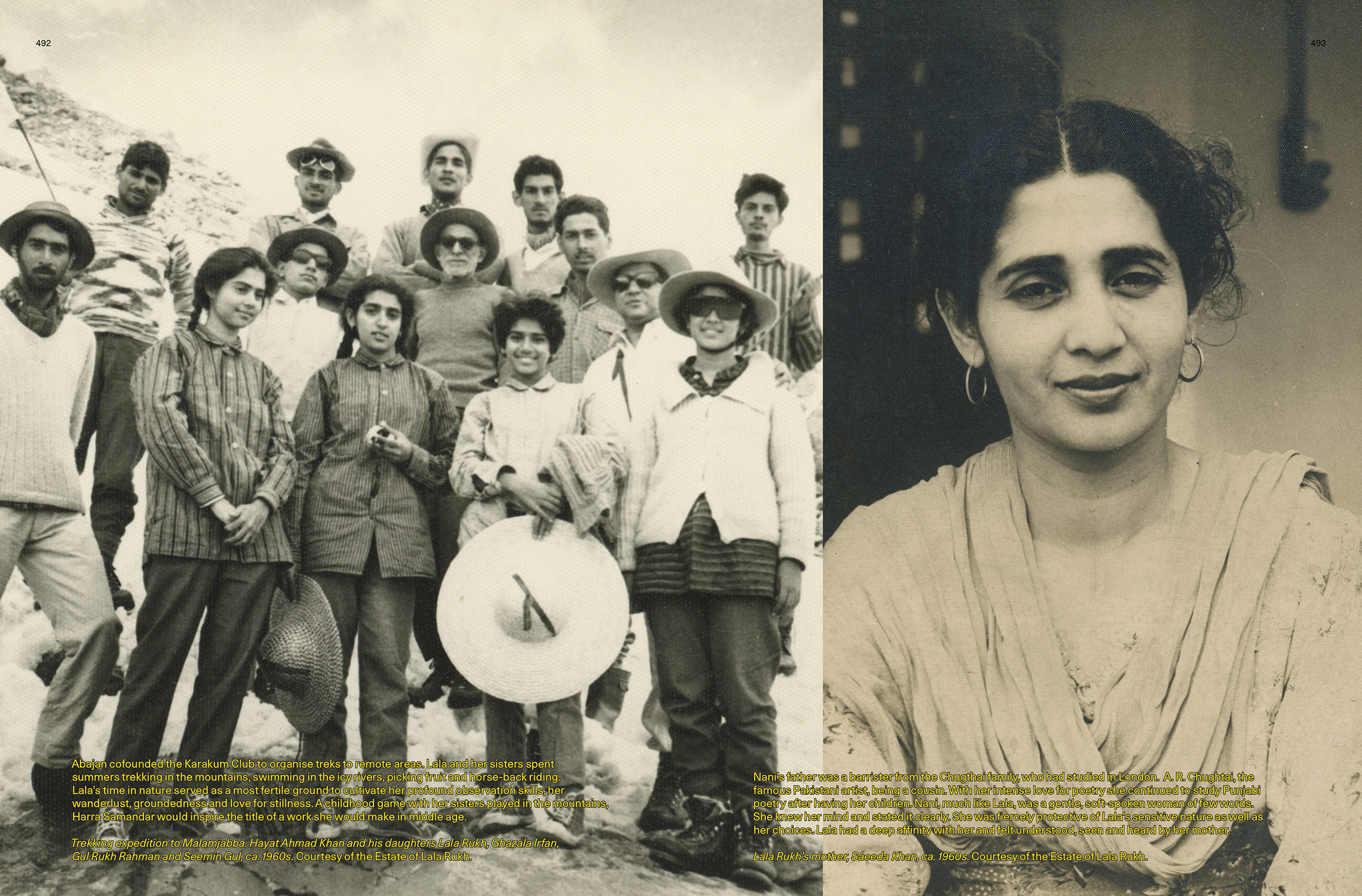
The Lala Rukh monograph is the first in-depth examination of the life and work of the feminist artist-activist Lala Rukh. Born in Lahore in 1948-2017, she belonged to the generation of foremost artists working at the intersections of abstraction, calligraphy, and Hindustani classical music in Pakistan. Activism joined with a distinguished teaching career at the National College of Art, Lahore, from 1982 till she retired in 2008; Lala Rukh often described herself as a radical feminist. She dedicated her life work to marching for the equal rights of women and documenting these protests that often intersected with peasant worker groups, for instance, demanding environmental justice or heritage conservation. Her services as an activist and teacher permeated almost everything she did.
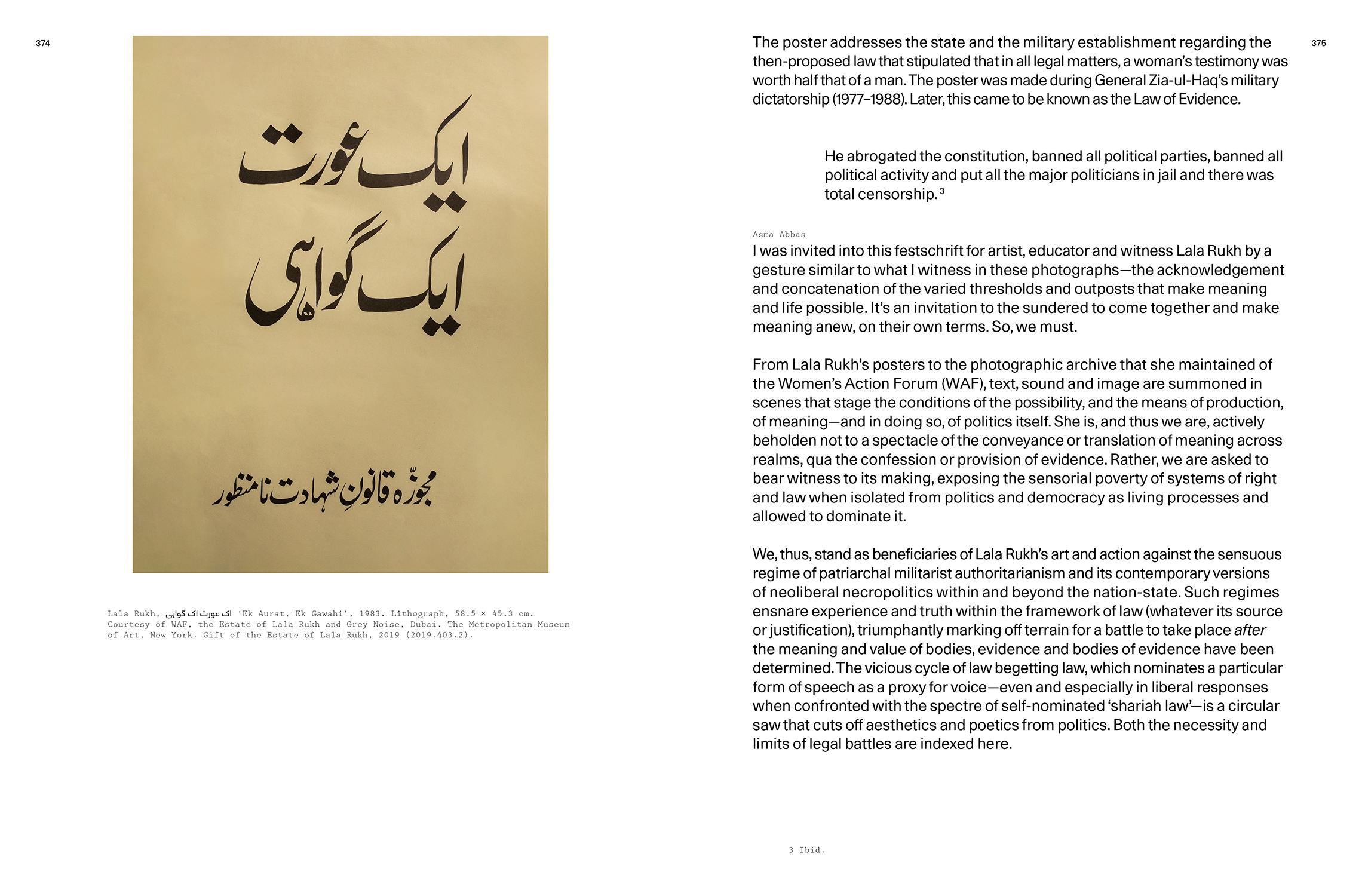
By tracing the activities and work of Lala Rukh as a grassroots feminist activist, the monograph explores how the seemingly disparate actions and the artworks made in the quietness of her studio could embody political consciousness and embolden political thought. The tension between truth and representation with a keen eye on life, like theatre and a fine appreciation for music shaped her work as reflections on culture, love, loss, language, poetry, and music, grappling with the overarching question of what an image is. The problem of representation, her interests in the history of the painted image, the link of photographs to violence and objectification of women's bodies, the space for women in public spaces—especially in Pakistan, teaching methods, and politics continued to engage her till the end. On the one hand, Lala Rukh was designing visually saturated protest posters during General Ziaul Haq's military dictatorship in the 1980s. On the other hand, she maintained a
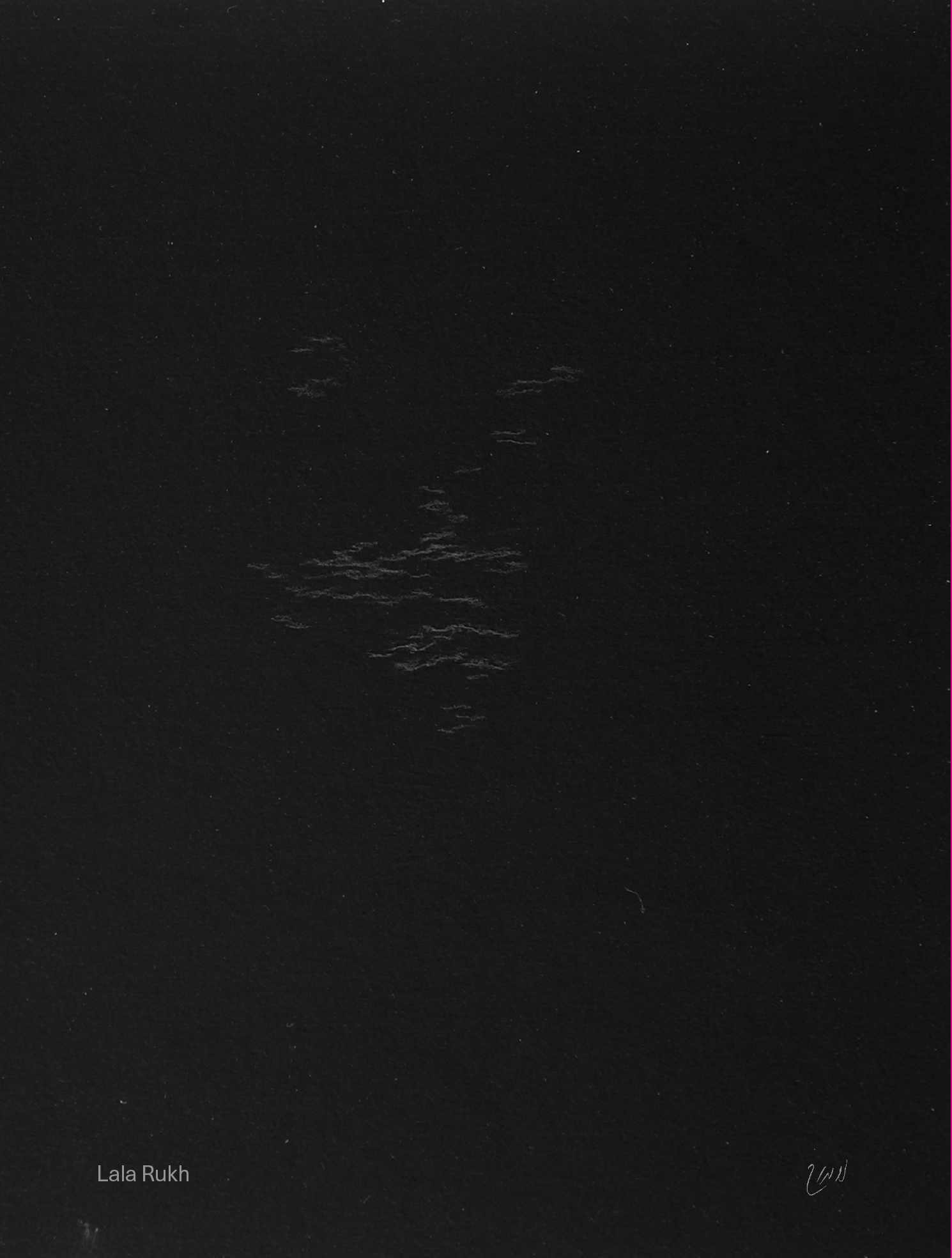
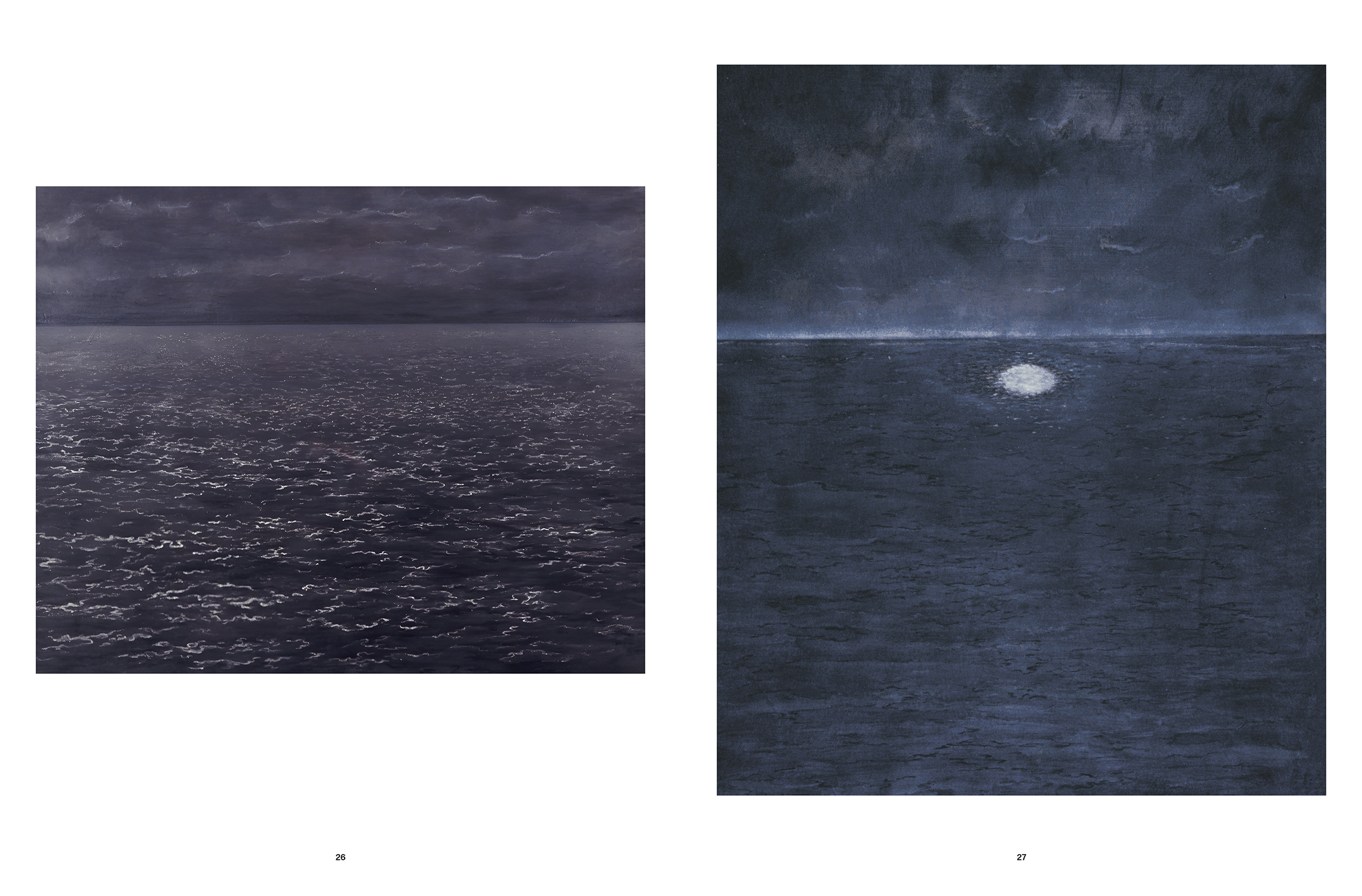
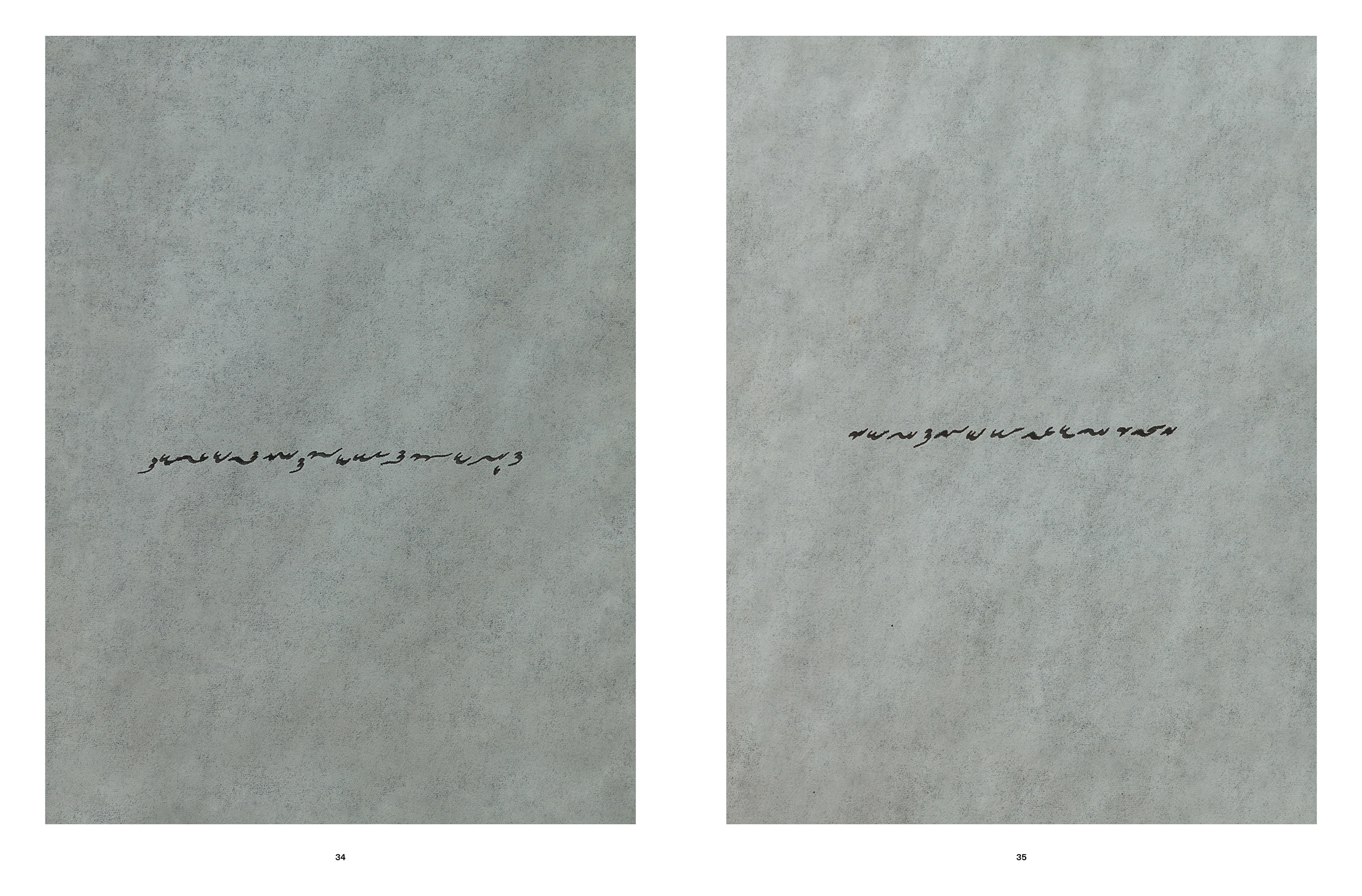
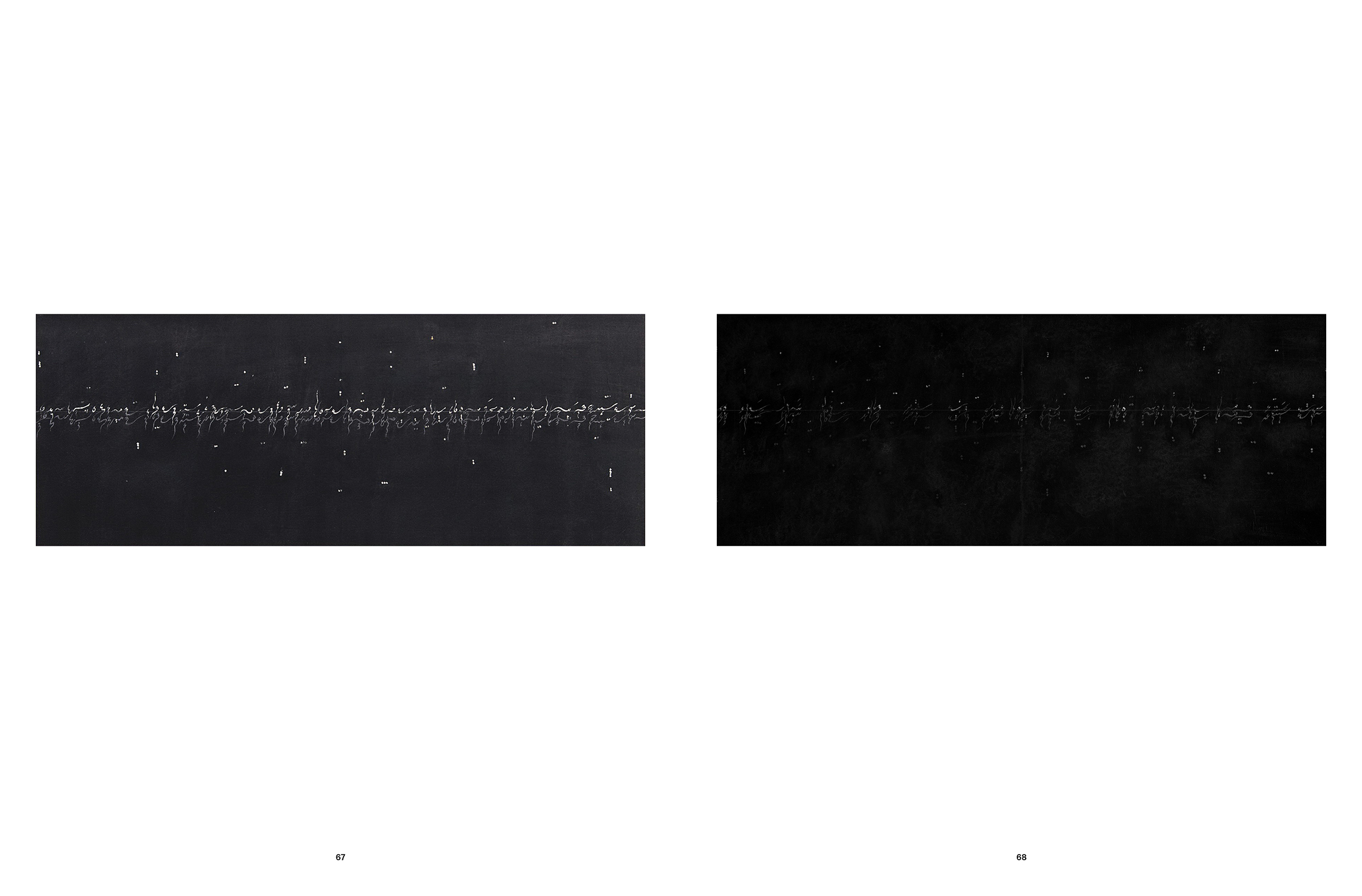
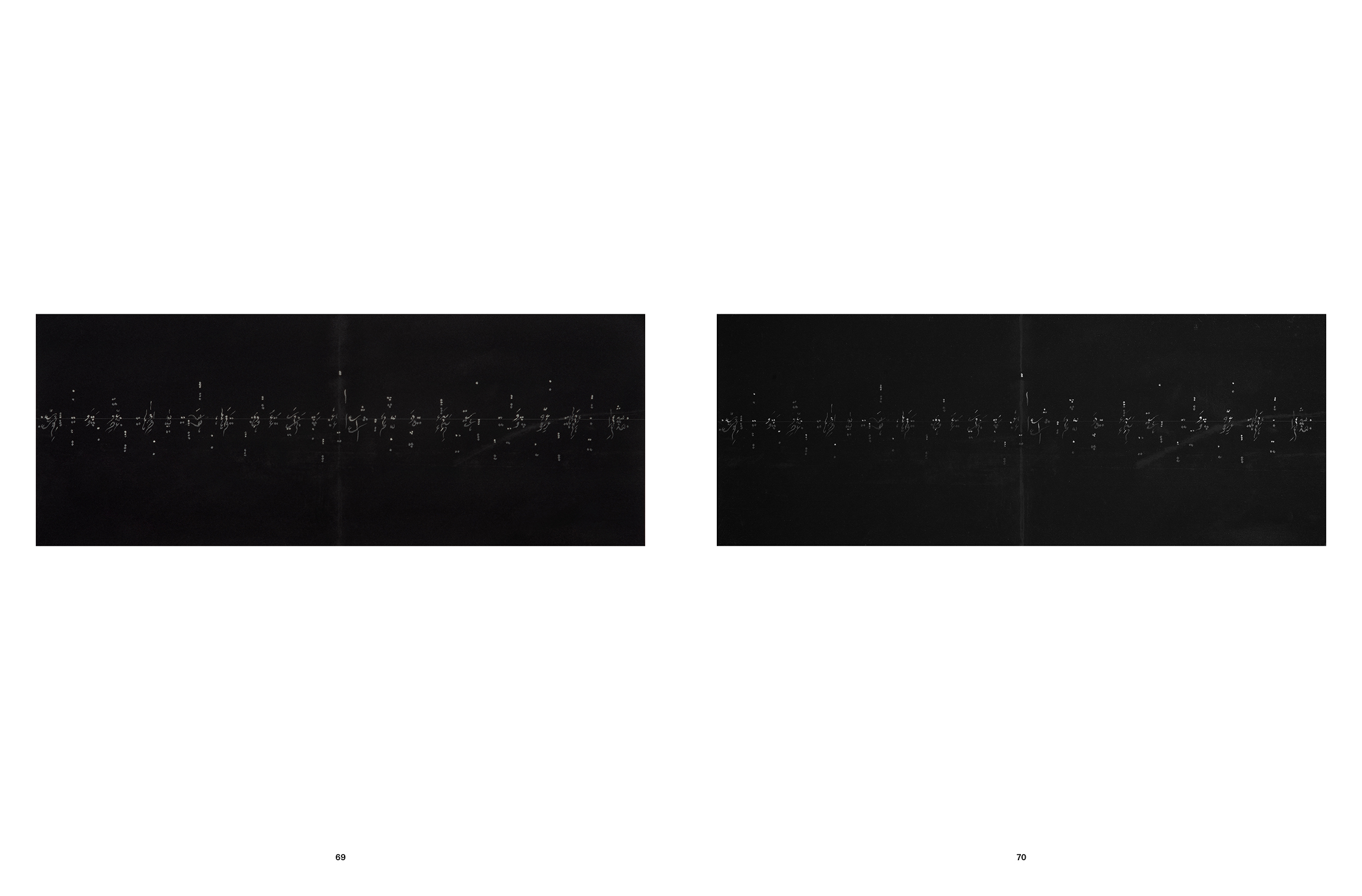
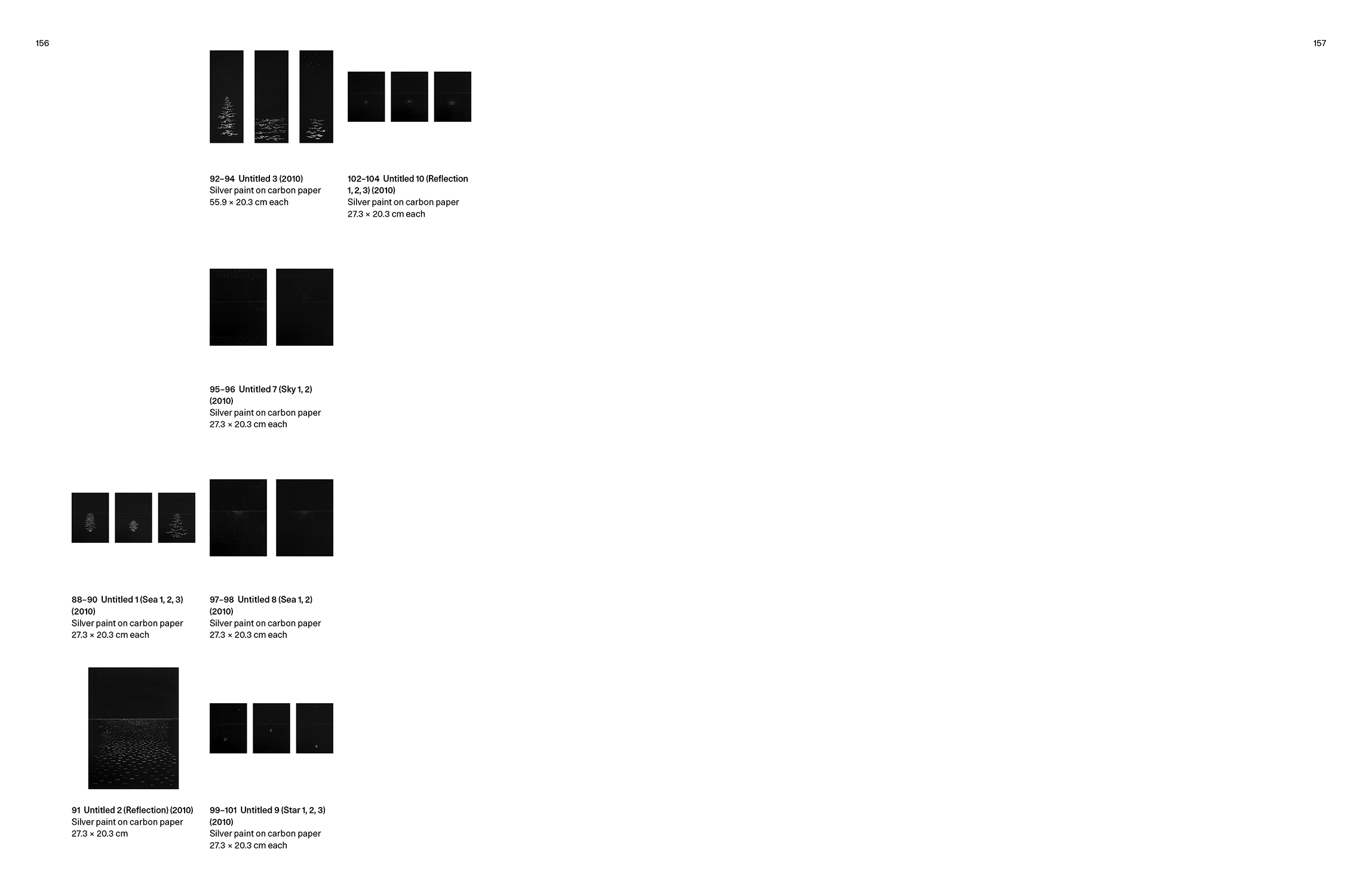
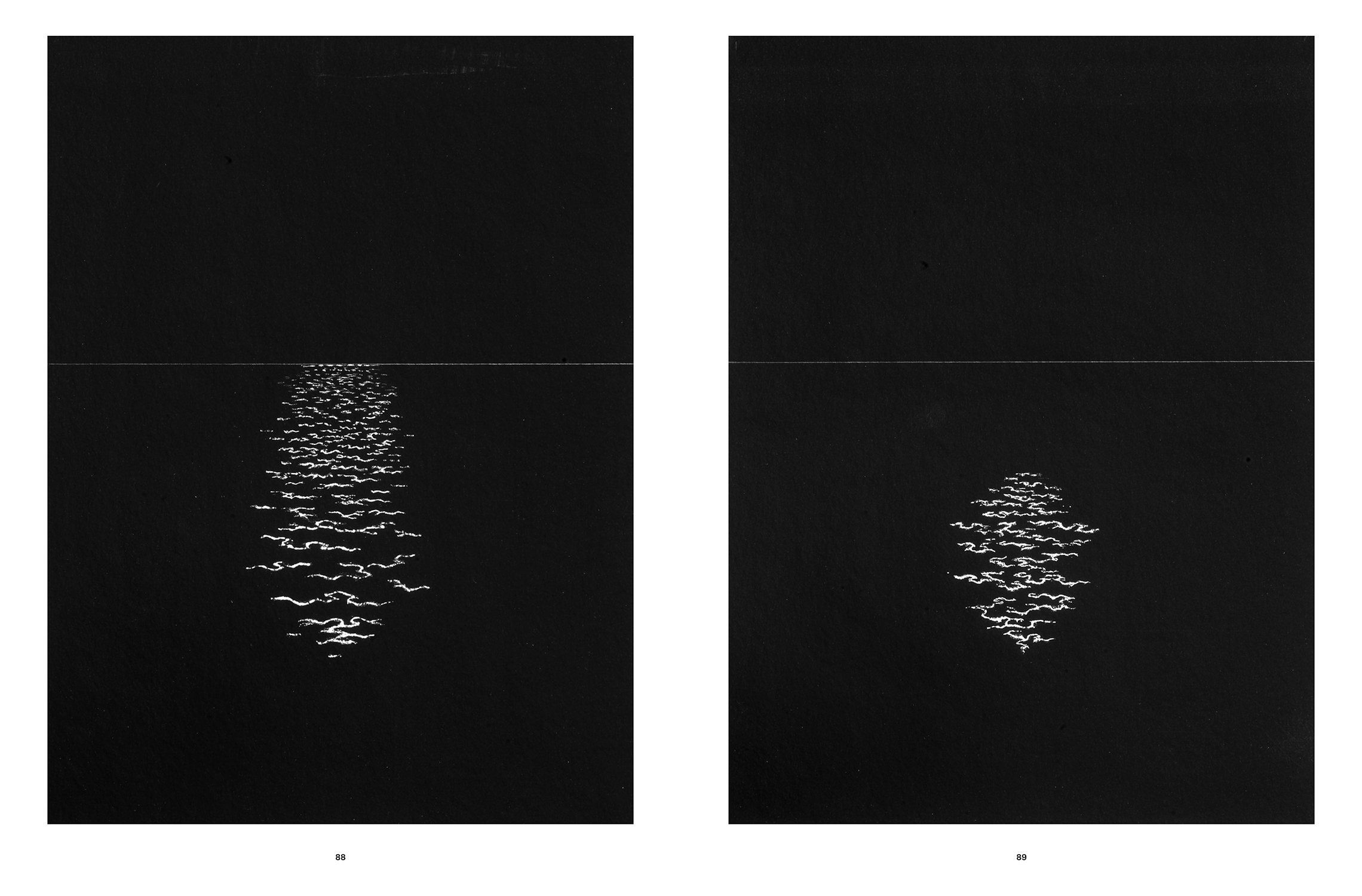
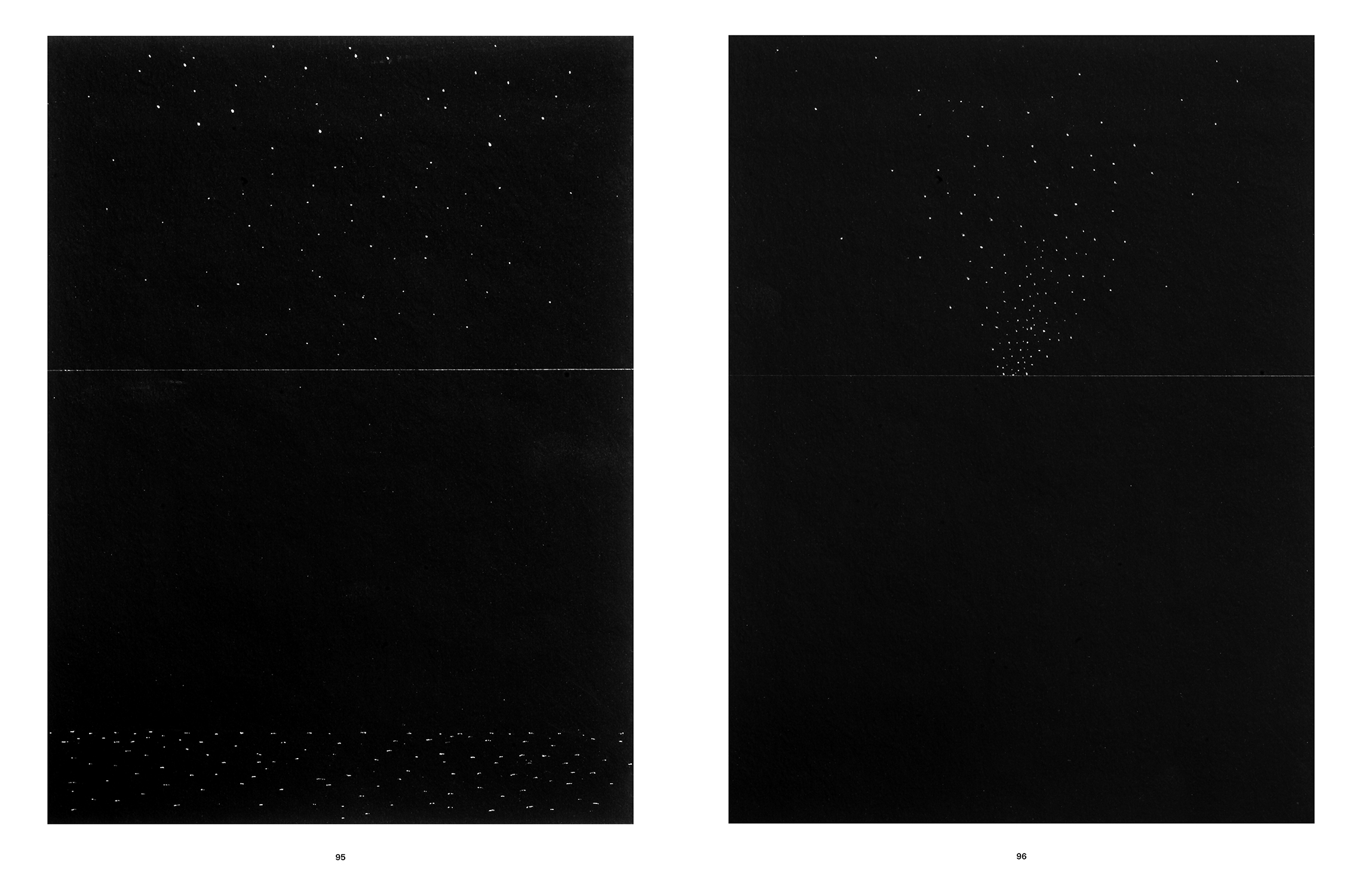
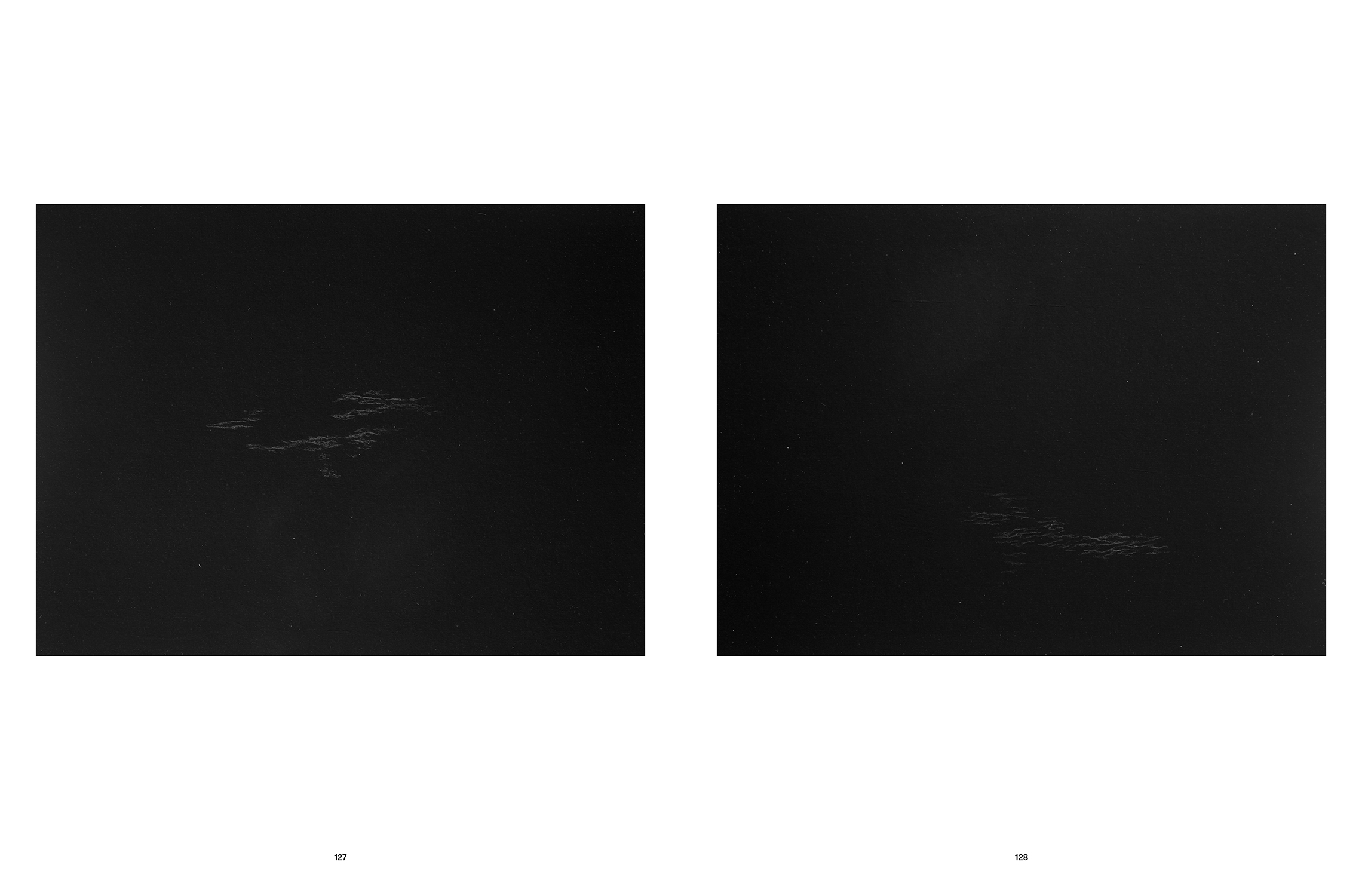
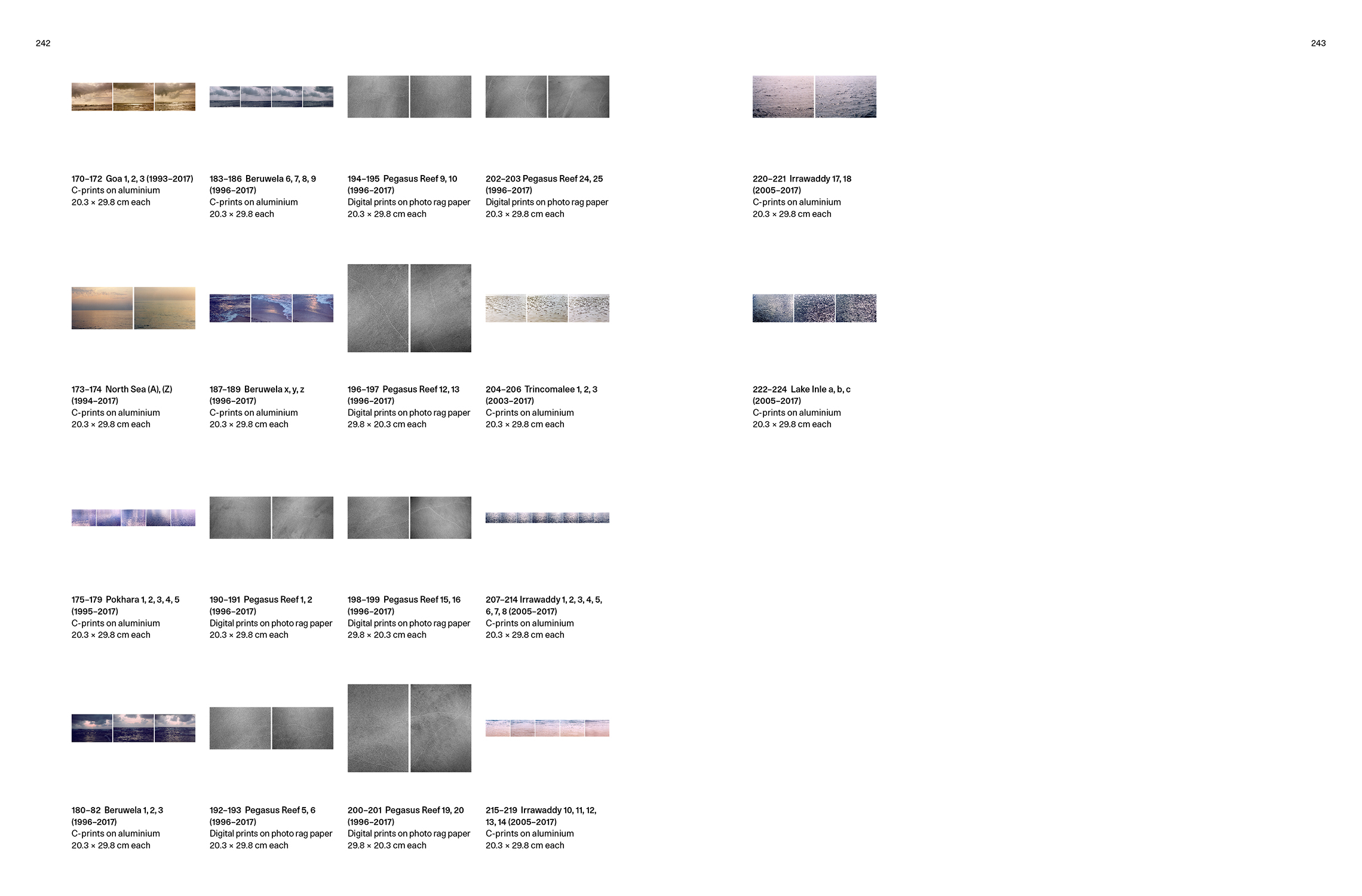
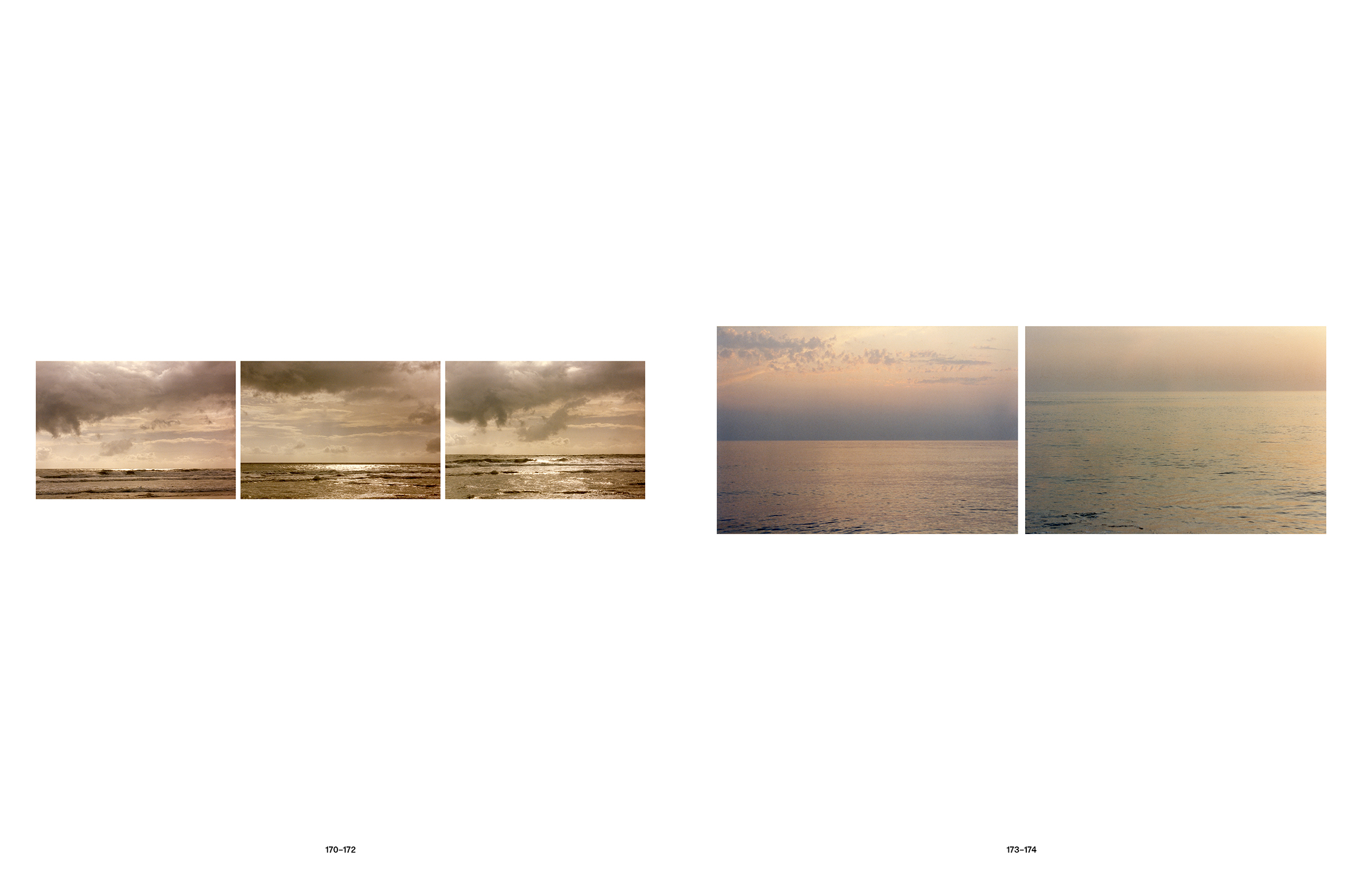
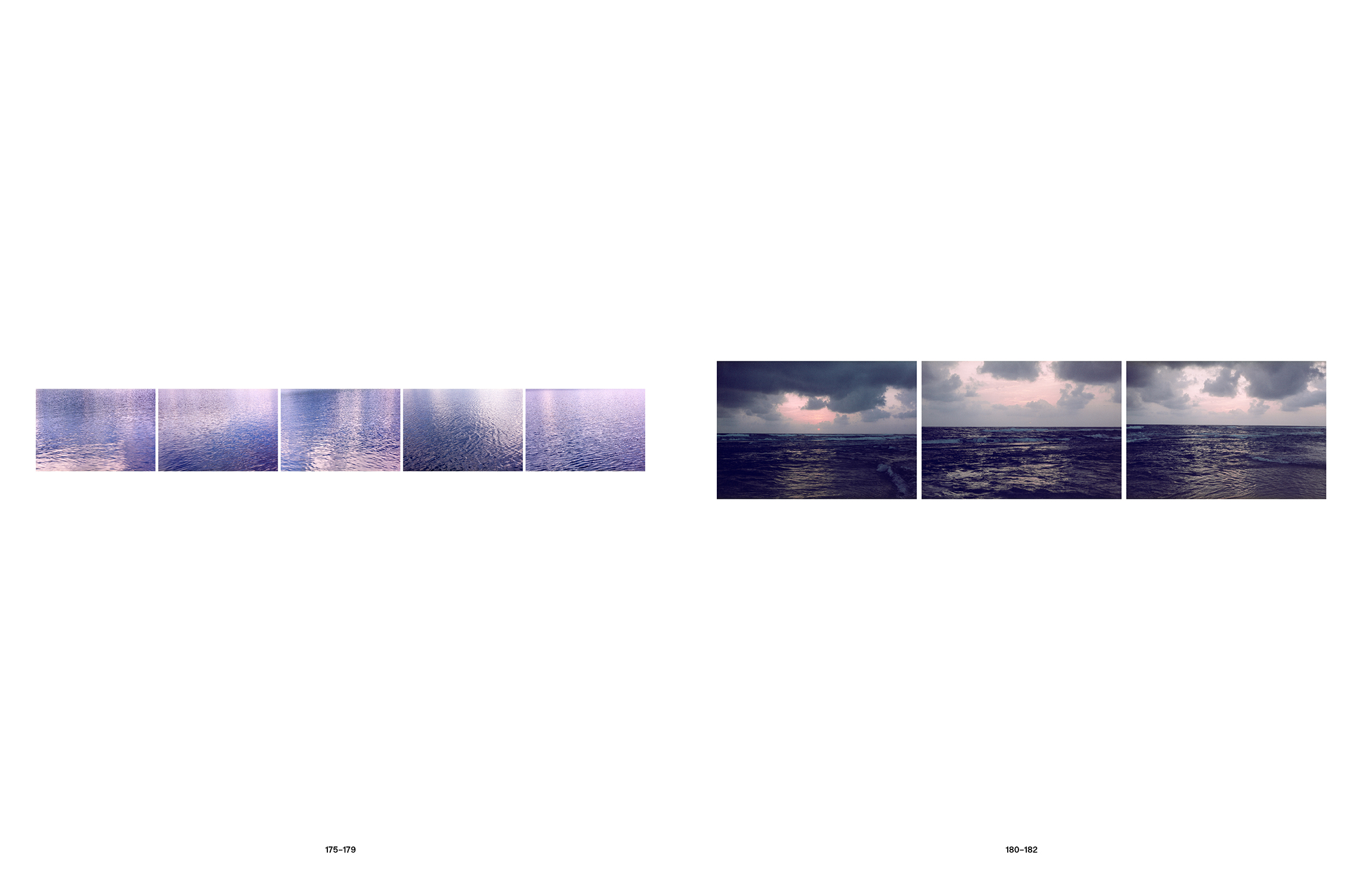
dedicated studio practice where she made meticulously conceived artworks with nothing to see using ordinary materials like pencil on paper, photographs, and print to later complex video, sound, and animation. Lala Rukh maintained a photographic record of the WAF marches in Lahore, and during the same period, she took hundreds of mesmerizing photographs of the ocean during her travels, particularly in South Asia, training women to print and publish their material. Once she returned to Lahore, she made contemplative, quiet, and barely perceptible drawings in solitude.
To try and think through some of these questions—in keeping with her eclectic approach to making art, activism, and teaching, the authors and designer of this monograph have taken up the proposition to come together to reflect upon the many facets of single-minded and focused art practice. The essays are attentive to the different aspects of Lala Rukh as a feminist artist, her political moorings, pedagogy, and de-colonial practice. The layout and design logic of the monograph are guided and inspired by the idiosyncrasies of her titles that appear in Urdu and English, the labeling and cataloging system of an archivist photographer, and bears the imprint of interdisciplinary scholarship.
Published following the first major retrospective on the artist at the Sharjah Art Foundation , Sharjah, in 2024.