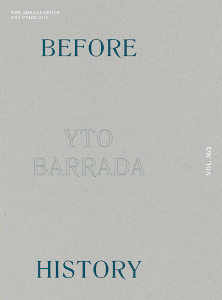
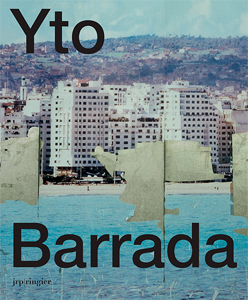
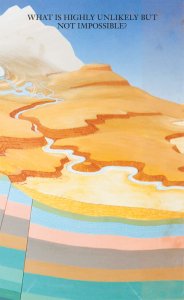
Comprehensive monograph.
This long-awaited comprehensive monograph—following
one previously published by JRP|Ringier in 2013—spans Yto Barrada's entire practice, from her first acclaimed photographic series
A Life Full of Holes (1998–2004) to her most recent research on textile, dying, and "color problems" in which she once more bridges the worlds of nature, materiality, and (art) history.
Designed by London-based design studio A Practice for Everyday Life, the volume, lavishly illustrated and produced, brings together an international group of writers to decipher the various methodologies, aspects, and perspectives active in Barrada's manifold practice: writer and curator Omar Berrada, anthropologist Arnaud Dubois, London's Barbican Centre curator Wells Fray-Smith, New York's MoMA curator Thomas Lax, art critic and historian E
Élisabeth Lebovici, editor and researcher Anaïs Masson, and writer and translator Yasmine Seale. The volume also features Barrada's commitment to the city of Tangier where she founded the Cinémathèque de Tanger in 2006 and the eco-feminist African campus and dye garden The Mothership in 2017, as well as her relationship with American artist Bettina (1927–2021) whose estate is in her care.
French-Moroccan artist Yto Barrada (born 1971, lives and works in Paris and New York) is one of the most important voices in contemporary art today. Since the early 2000s, her multidisciplinary practice—films, installations, sculptures, textile works, publications, photographs, site-specific projects—has explored cultural phenomena and subaltern histories, strategies of resistance and disobedience, historical narratives and natural processes, the transmission of knowledge, and methods of archiving and collection. Undertaking long-term projects, often in collaboration with other artists, amateurs, and experts, she has successively focused on botany as politics and geography, the history of education, the economics of prehistoric fossils, postcolonial links between Morocco and the West, and a reinterpretation of the history of abstract pictorial avant-gardes to offer an alternative vision of modernity. The playful resources of language, the dynamics of translation, and the infinite possibilities of print occupy a prominent place in her practice.
Yto Barrada is the founding director of the Cinémathèque de Tanger.
She is
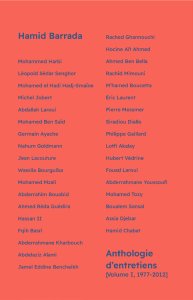
Hamid Barrada's daughter.