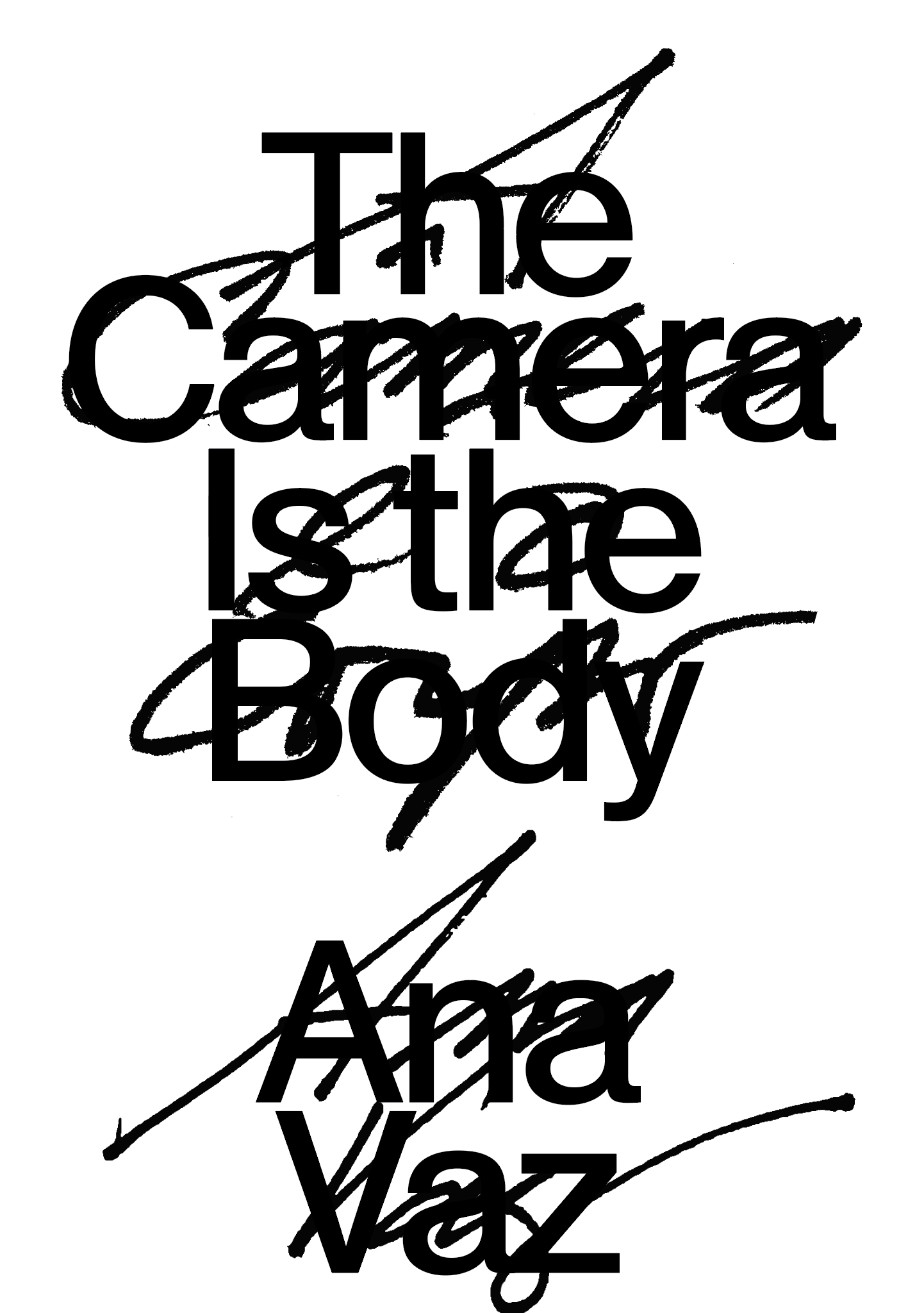
Reference monograph.
Since the end of the 2000s, Ana Vaz has set out to unlearn the camera's oldest habit: the vertical gaze that parses and captures. Her films start at the ground, alongside the submerged perspectives that extraction was built to ignore. Rooted in the unruly tradition of Brazilian cinema, and nourished by critical theory, radical pedagogy, and knowledge systems that sidestep the Western canon, her work invites us to see otherwise, to notice that every act of looking is also an act of exposure.
Published to coincide with her first solo exhibition,
A câmera é o corpo (
The Camera is the Body), at Mudam Luxembourg, this reference monograph brings together commissioned essays by Erika Balsom, Fernanda Brenner, Juliana Fausto, and Tristan Bera; conversations with
Olivier Marboeuf,
Suely Rolnik, and Dilton de Almeida, as well as Vaz's own writing. This collection examines a body of work that extends beyond the screen, engaging with questions of decolonial criticism, political ecology, and micropolitical resistance.
Ana Vaz (born in 1986 in Brasília) is a Brazilian artist and filmmaker. Her films and installations investigate the legacy of colonial modernity and its lasting impact on land and communities. In each of her works, she focuses on the scars, ruins, ghosts and obscured stories that inhabit these territories, while also tracing the potentialities, intensities and alliances that may arise from them. Subverting the rational subject of Western narratives, Vaz approaches human, animal and vegetal worlds through what she calls "embodied cinema". In it, affects and bodies take precedence.